
A look back at ARMO Executive Forum 2026

)
Daan Buitenhuis
Communication


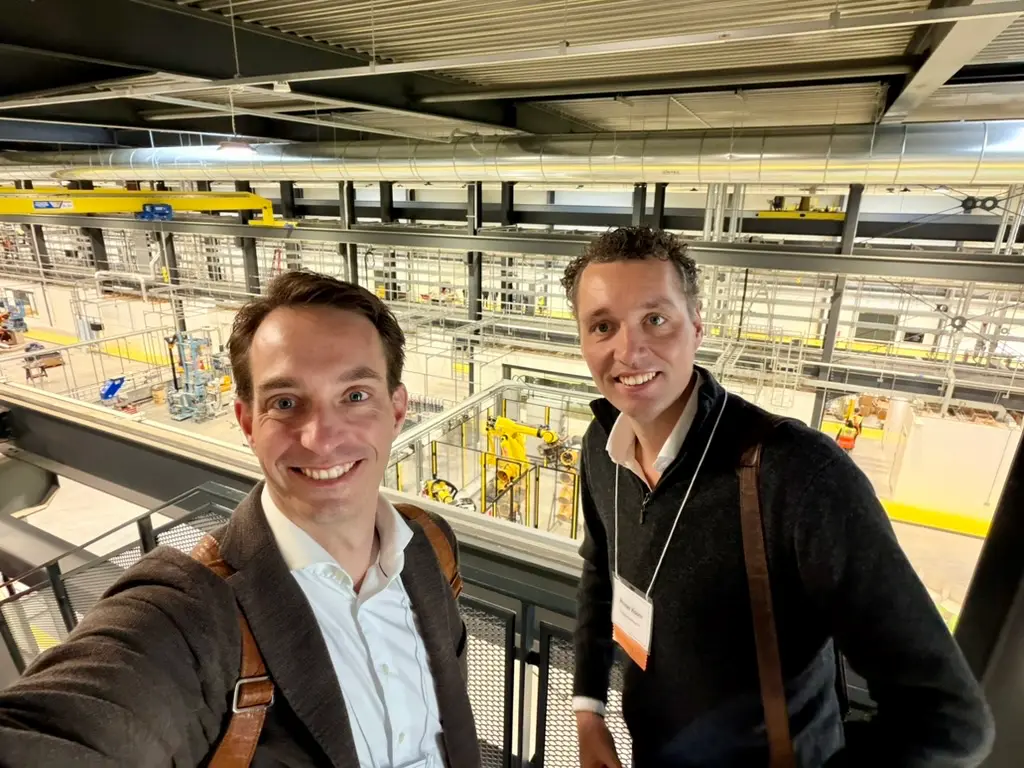
Wouter and Marthijn represented Pentas at the ARMO Executive Forum in Belfast. During this international event, professionals from the rotational moulding industry came together to exchange knowledge and experiences on the latest developments within the sector.
Table of contents
Over the course of two days, the focus was on innovation, digitalisation, sustainability, and advanced materials. The presentations and company visits demonstrated how the rotational moulding industry continues to evolve and how new technologies are increasingly finding their way into everyday production.
Nearly 40 years of research in rotational moulding
The conference opened with a retrospective of nearly four decades of rotational moulding research at Queen’s University Belfast. Paul Nugent, Alvin Spence, and Mark Kearns guided participants through major developments, including the Rotolog, process monitoring, and simulation models. These innovations have made a significant contribution to the continued professionalisation of the rotational moulding industry worldwide.
One of the most interesting practical examples demonstrated how Virtual Reality is being used to digitally design complete production facilities before the first machine is installed. This allows operators to contribute at an early stage by optimising material flow, ergonomics, and production efficiency.
Sustainability becomes increasingly important
Sustainability was a key theme throughout both days of the conference. Ronny Ervik (Norner) provided insight into the rapidly evolving European regulations concerning circularity, the use of recycled materials, and the introduction of Digital Product Passports. The message was clear: sustainability is evolving from a voluntary ambition into a legal requirement.
Material developments also received considerable attention. Eric Maziers (TotalEnergies) presented new rotational moulding materials containing 60% post-consumer recycled content while delivering performance comparable to traditional virgin materials. At the same time, it became clear that the availability of high-quality recycled roto-grade materials will remain one of the industry’s greatest challenges in the years ahead.
New materials and smarter product design
In addition to sustainability, material innovation was another major topic. Nick Henwood (Matrix Polymers) demonstrated that the choice between dry colour and compounded colour has a much greater impact on final product performance than is often assumed. Certain pigments can significantly reduce impact strength, making material expertise and extensive testing essential.
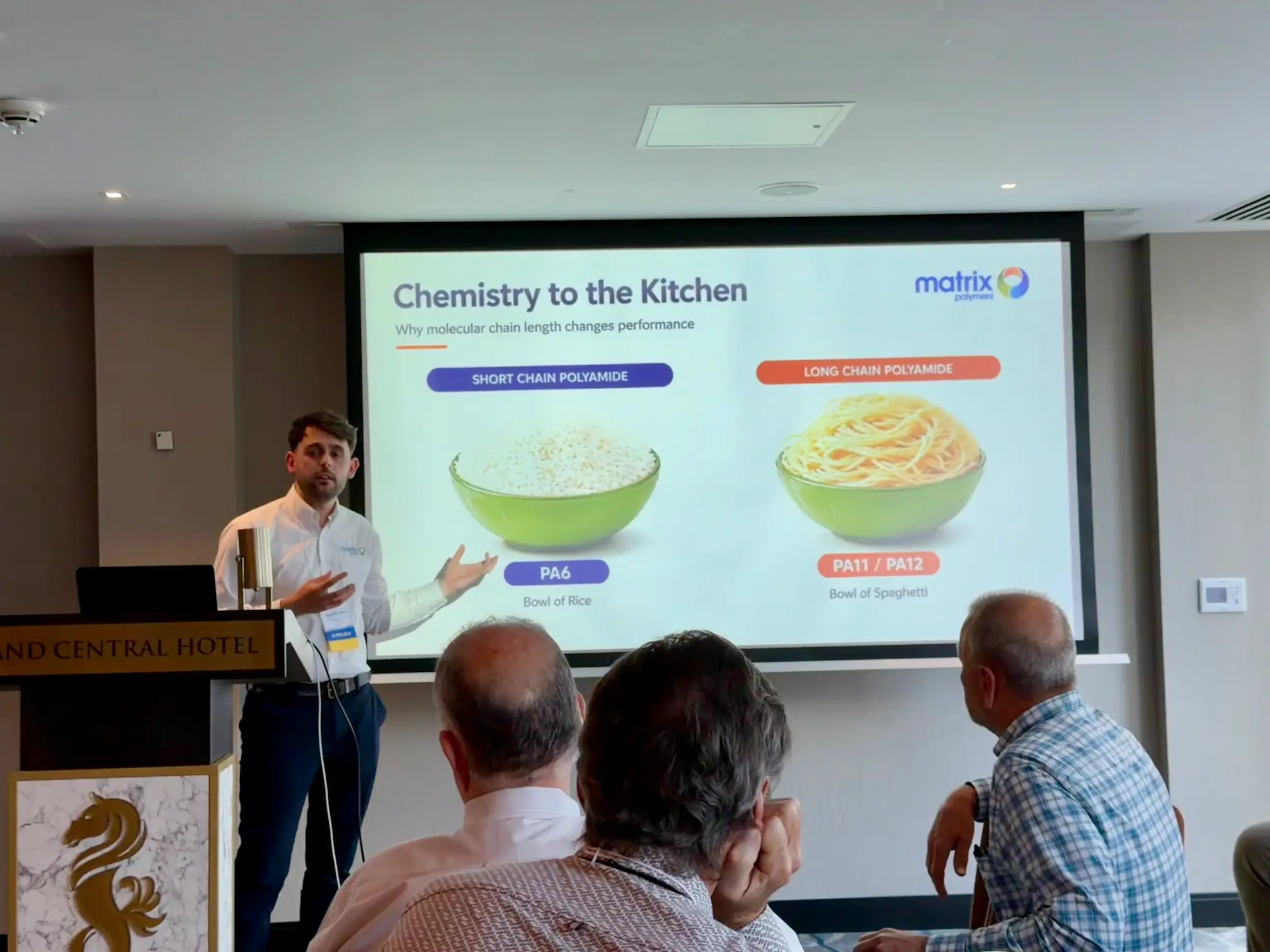
Jake Kelly Walley (Matrix Polymers) presented the latest developments in polyamide PA6 for applications including the automotive industry, energy storage, and hydrogen systems. Using a simple comparison between a bowl of rice and a bowl of spaghetti, he clearly illustrated how the structure of polymer chains influences material properties.
Product development also received significant attention. Joe Butterfield demonstrated how parametric design can substantially reduce the development time of new products. Tony Short emphasised that manufacturing considerations should already be incorporated during the product design phase.
Practical improvements on the production floor
In addition to technological innovations, several presentations focused on practical improvements within production processes. Stoner Molding Solutions demonstrated how relatively simple optimisations in mould cleaning, release agent application, and process discipline can directly improve product quality, facilitate demoulding, and reduce cycle times.
Przemyslaw Orlik discussed the importance of stable production processes and the role of backup power systems, while Matt Bushman explained the differences between blow moulding and rotational moulding, highlighting the strengths of both manufacturing technologies.
Oliver Wandres (MAUS) demonstrated how automation is becoming increasingly integrated into both electric and conventional rotational moulding processes. Dr. Paula Orcutt emphasised that operational excellence depends not only on technology but begins with leadership, daily habits, and a strong team culture.
Visit to the Advanced Manufacturing Innovation Centre
The second day of the conference began with a visit to the Advanced Manufacturing Innovation Centre (AMIC) at Queen’s University Belfast. With an investment of more than £100 million, this innovation centre plays a key role in advancing modern manufacturing. Advanced production technologies, robotics, automation, digitalisation, and sustainability are brought together to transform research into practical industrial applications.
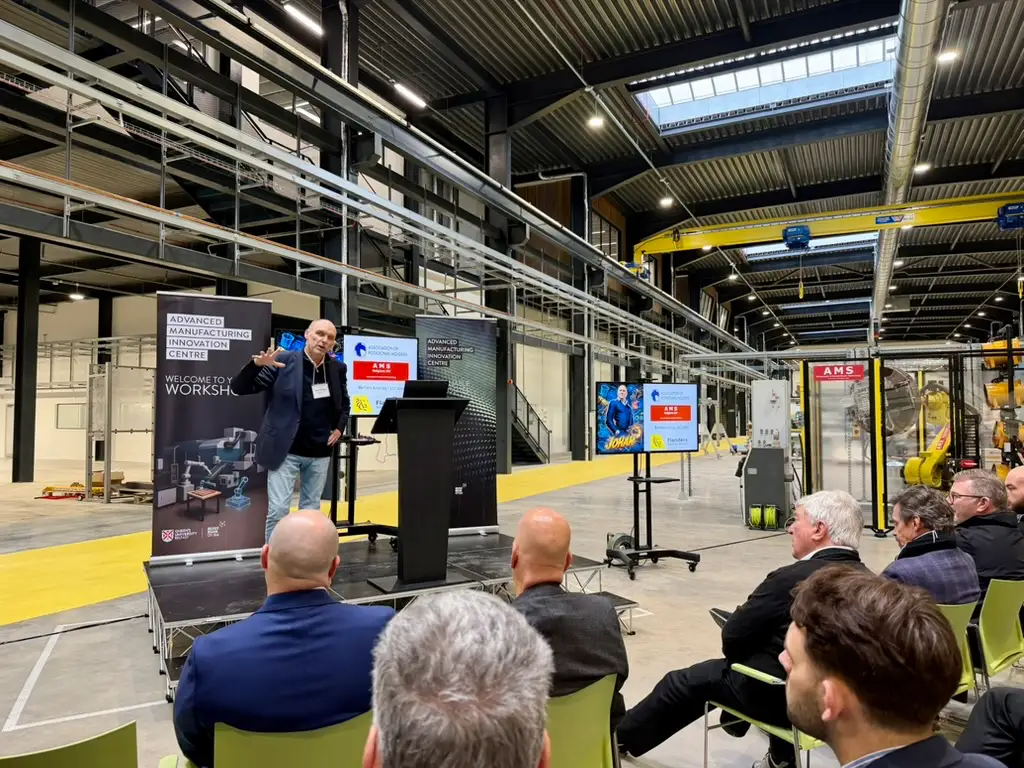
During the visit, the Digital Twin concept received particular attention. Several rotational moulding machines are part of a fully connected production environment where data is continuously collected, analysed, and converted into valuable production insights.
This development closely aligns with the direction Pentas is taking. Within Pentas, connected machines, AI applications, and data-driven dashboards are playing an increasingly important role in optimising production processes.
Digital twins and the factory of the future
Digitalisation was one of the conference’s central themes. Johan Potargent demonstrated how Digital Twins, simulation, and data-driven rotational moulding help manufacturers better understand, predict, and optimise their production processes.
Dr. Gareth McDowell and Dr. Nick Henwood took a deeper look at the cooling process in rotational moulding. They showed that cooling remains one of the most complex variables within the manufacturing process and that improving the understanding of this stage directly leads to higher product quality and more consistent production.
The closing presentation by Mark Kearns brought together many of the conference themes, demonstrating how the continued digitalisation of the entire rotational moulding process is steadily becoming reality.
The future of rotational moulding
Throughout both conference days, one message consistently emerged: the future of rotational moulding will increasingly be shaped by the combination of digitalisation, automation, simulation, advanced materials, and process control.
For Pentas, these developments confirm that the industry continues to evolve rapidly and that many innovations are now making the transition from research to practical industrial applications. At the same time, many of the presented developments closely align with the projects Pentas is working on every day in the fields of AI, connected machines, data-driven manufacturing, and process optimisation.
Beyond the technical programme, both days provided valuable opportunities to exchange experiences with colleagues from across the international rotational moulding industry. As a result, the ARMO Executive Forum 2026 proved to be not only an excellent source of new knowledge but also an inspiring event where collaboration and innovation took centre stage.